

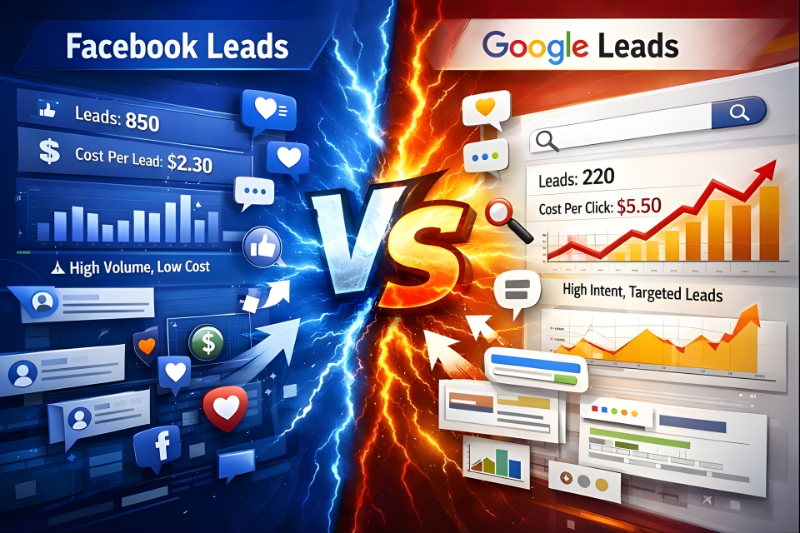
Facebook Leads Are Cheaper Than Google Leads
Businesses running paid ads often notice one clear pattern: Facebook leads usually cost less than Google leads. While both platforms can deliver strong results, the price difference can be confusing at first. The reason lies in how users behave on each platform and how advertising works behind the scenes.
Understanding these differences helps businesses choose the right platform based on budget, goals, and sales strategy.
User Intent: Discovery vs. Demand
The biggest difference between Facebook and Google is user intent.
Facebook is a discovery platform. People scroll through their feed to relax, socialize, or consume content. They might not be concentrated on goods and services. Ads appear naturally in their feed, and if the message or creative grabs attention, users may click out of interest or curiosity.
Google, however, is intent-driven. Users search because they want answers, solutions, or products. Keywords like “hire a lawyer,” “best CRM software,” or “emergency AC repair” show clear buying intent. Advertisers are willing to pay more for these searches, which increases competition and cost per lead.
Larger Audience Reach on Facebook
Facebook has an enormous global user base, allowing advertisers to reach millions of people quickly. With advanced targeting options based on interests, behaviors, demographics, and life events, Facebook can show ads to the right people without relying on active searches.
Google ads depend on search volume. If only a small number of people search for a keyword each day, advertisers compete aggressively for that limited traffic. High competition and limited supply push prices higher.
Easier Lead Generation Process
Facebook’s lead generation forms are designed for convenience. Users can submit their details without leaving the platform, often with pre-filled information like name and email. This frictionless experience increases conversion rates and keeps lead costs low.
On Google, users usually click through to a landing page. They may face slow load times, long forms, or distractions. Each extra step reduces the chance of conversion, increasing the cost per lead.
Creative Freedom Lowers Costs
Facebook allows brands to use images, videos, reels, testimonials, and storytelling to attract attention. Emotional and visual content performs well, helping advertisers connect with users before they are ready to buy.
Google ads rely mainly on text and keyword relevance. While effective, they offer less room for creativity, making it harder to stand out without bidding higher.
Competition and Bidding Differences
Google ads operate in a highly competitive auction system. High-intent keywords attract many advertisers, especially in industries like real estate, finance, legal services, and healthcare. This drives up costs significantly.
Facebook ads often face less direct competition because targeting is interest-based rather than keyword-based. This flexibility helps keep bidding costs lower.
Lead Quality vs. Lead Volume
Lower cost does not always mean higher quality. Facebook leads may need nurturing, follow-ups, and trust-building since users were not actively searching. Google leads often convert faster due to stronger intent.
For this reason, many businesses use Facebook for high-volume lead generation and brand awareness, while Google is used for capturing ready-to-buy customers.
Final Thoughts
Facebook leads are cheaper because you are paying for attention and interest, not immediate demand. Google leads cost more because you are paying for urgency and intent. Both platforms serve different purposes, and the best results often come from using them together strategically.