
Muse AI Explained: How It Works, What Businesses Need to Know
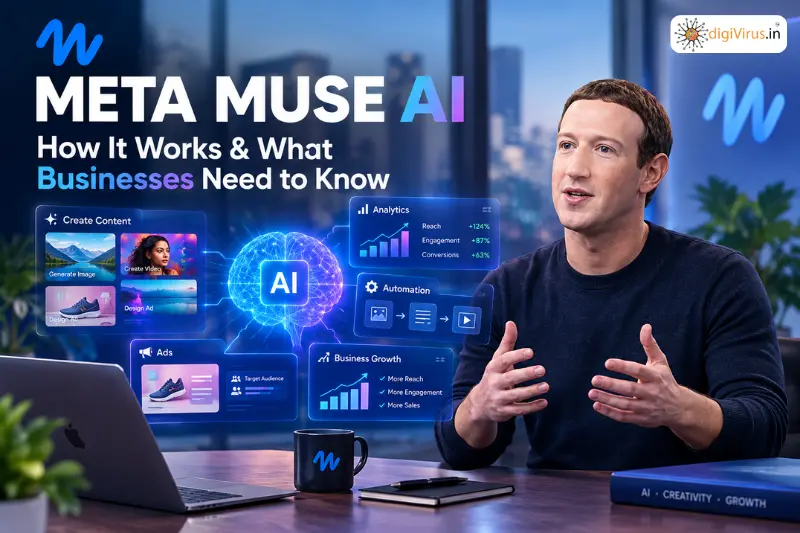
Artificial intelligence is becoming a bigger part of how people search, create content, shop, and interact with brands online. Meta is also moving deeper into this space with its new Muse family of AI technologies. From improving how Meta AI understands questions to helping create images and other content, Muse is designed to make digital experiences more useful and personalized.
For businesses, this development is worth watching because Meta is also bringing Muse-powered technology into its advertising and creative ecosystem.
What Is Meta Muse AI?
Meta Muse is not simply one standalone AI feature. It is a growing family of technologies developed by Meta to improve its AI products and experiences.
One important part of this family is Muse Spark, a large language model developed by Meta Superintelligence Labs. Meta says Muse Spark is designed to handle complex reasoning and multimodal tasks, meaning it can work with different types of information such as text, images, and voice.
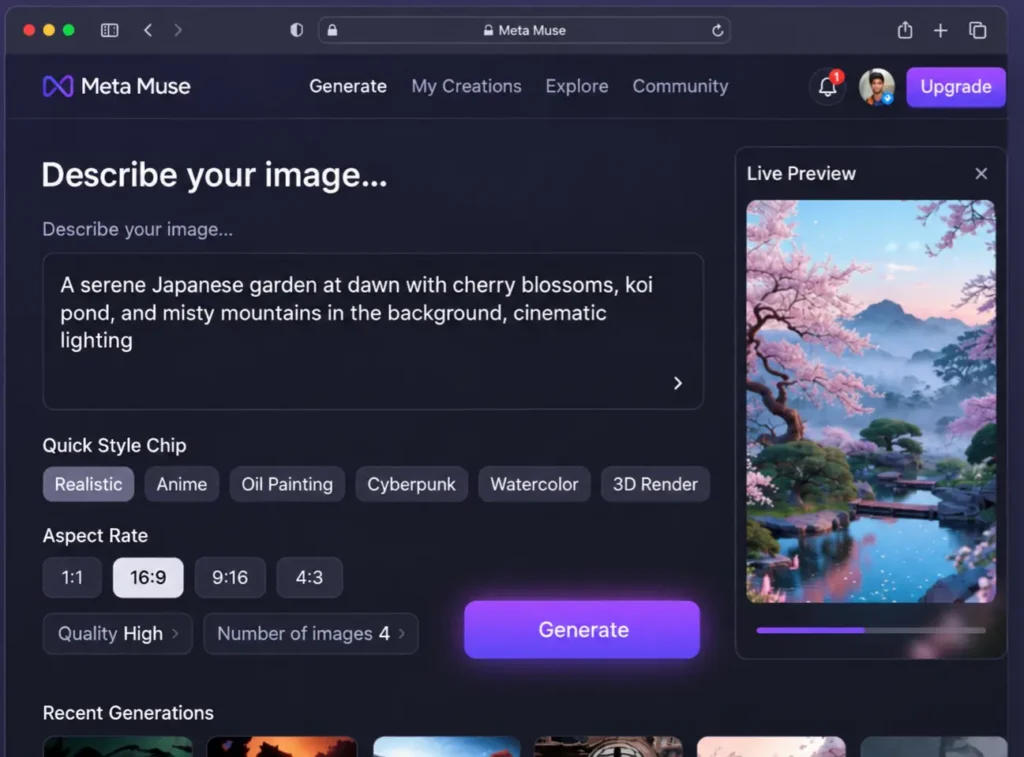
Another major development is Muse Image, Meta’s image-generation model. It can understand written instructions, create visuals, combine multiple references, and make changes to existing images. Meta has also said that Muse Image will become available to advertisers through Meta Advantage+ creative.
How Does Meta Muse Work?
The technology works by understanding what a person is asking for and then processing the context needed to produce a useful response or result.
For example, with Muse Image, a user can describe the type of image they want using normal language. The system can then interpret the prompt, understand the requested composition, combine visual references, and generate an image. Users can also continue refining the result instead of starting from scratch every time.
Muse Spark works more broadly. It is built to reason through complicated requests and can support tasks that involve multiple steps. Meta has also described newer versions of Muse-powered Meta AI as being capable of planning tasks, working with connected applications, and carrying out certain activities on a user’s behalf.
Why Does Meta Muse Matter to Businesses?
For businesses, the biggest opportunity may be in content creation and advertising.
Producing advertising creatives traditionally involves several steps. A business may need a designer, copywriter, video editor, photographer, and advertising specialist before a campaign is ready. AI tools can reduce some of the time required for these tasks.
Muse Image, for example, can help create or modify visuals from simple instructions. Meta says the technology can generate images, edit existing photos, combine references, and create visuals containing readable text.
This could be useful for businesses that regularly need:
- Social media creatives
- Product advertising images
- Campaign variations
- Promotional visuals
- Seasonal marketing content
- Visual concepts for new campaigns
The value is not simply producing more images. Businesses can potentially test more creative ideas and make campaign production faster.
What Could Change in Meta Advertising?
Meta has been steadily adding AI to its advertising products. The company has already introduced generative AI features for advertisers and has systems for identifying when certain ads have been created or significantly edited using its generative AI tools.
With Muse Image moving toward Meta Advantage+ creative, advertisers may have access to more advanced creative-generation capabilities within Meta’s advertising ecosystem.
This could change how marketers approach creative testing. Instead of producing only a few versions of an advertisement, teams may be able to explore different visual concepts, formats, and messages more quickly.
However, AI-generated creative should still be guided by a clear marketing strategy. A technically impressive image will not automatically produce sales. Audience understanding, positioning, offer, copy, landing-page experience, and campaign optimization remain important.
What Should Businesses Do Now?
Businesses do not need to completely change their marketing strategy because of Muse. Instead, they should start understanding how AI can fit into their existing workflow.
The strongest approach is to use AI for speed and experimentation while keeping human judgment at the center of important decisions. Marketers should review generated content for accuracy, brand consistency, originality, and relevance before publishing or using it in paid campaigns.
Final Thoughts
Meta Muse represents a broader shift in how Meta is building AI into its products. Muse Spark focuses on reasoning and multimodal interaction, while Muse Image brings more advanced creative capabilities to image generation and editing.
For businesses, the important question is not whether AI will replace marketing teams. The more practical question is how teams can use these technologies to work faster, test better ideas, and create more relevant experiences for their audiences.
As Meta continues expanding Muse across its products and advertising tools, businesses that learn how to combine these capabilities with strong marketing fundamentals will be better prepared for the next stage of digital advertising.