
Top Social Media Mistakes Brands Make in Inbound Marketing
Inbound marketing heavily relies on social media. It helps brands attract, engage, and convert audiences by providing value-driven content and meaningful interactions. However, many businesses still struggle to use social platforms effectively. Instead of supporting inbound goals, common mistakes often weaken brand trust, reduce engagement, and limit long-term growth. Understanding these mistakes is the first step toward building a stronger, more human-centered social media strategy.
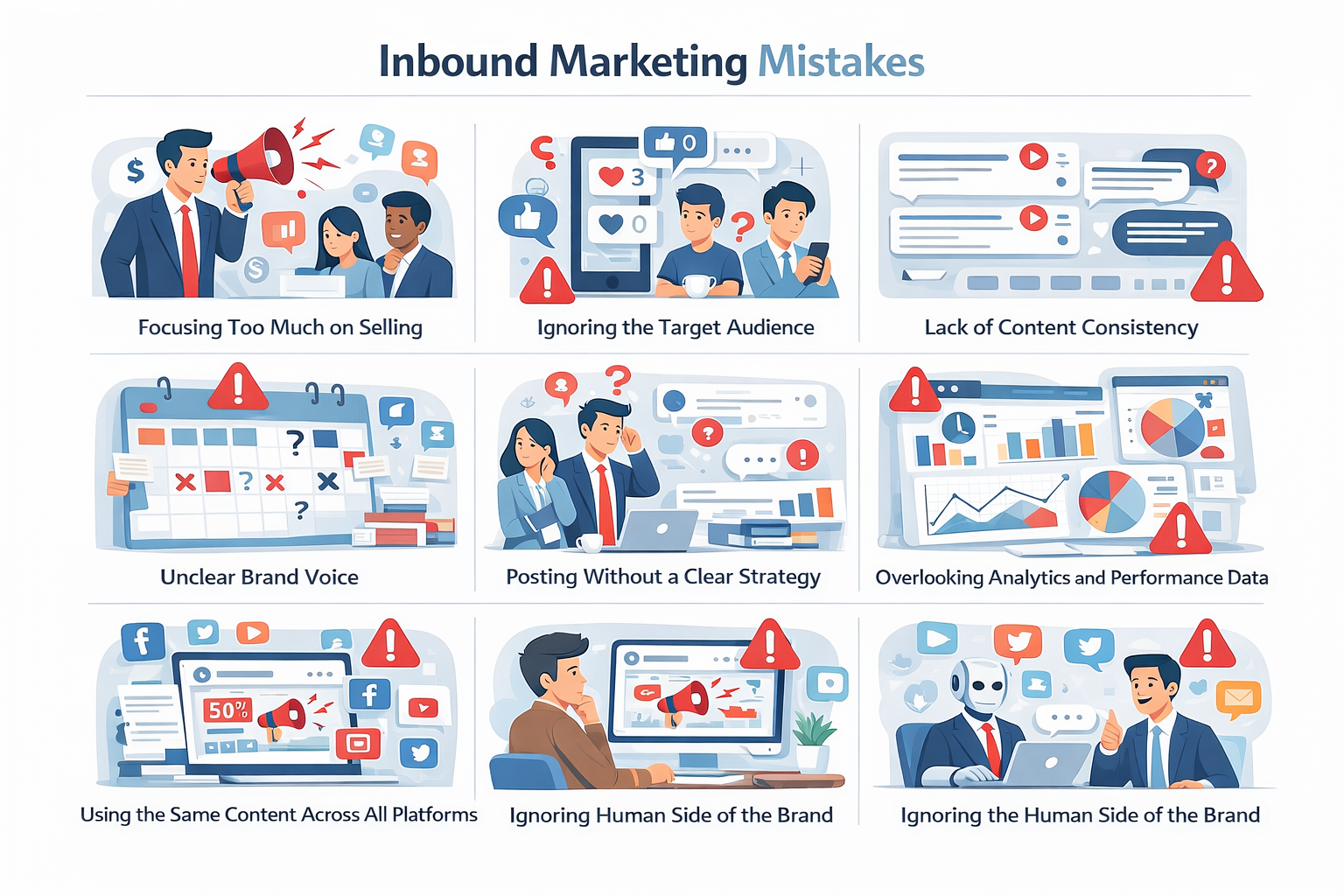
1. Focusing Too Much on Selling
One of the biggest mistakes brands make is treating social media like a sales billboard. Inbound marketing is built on attraction, not interruption. When every post is a promotion, discount, or product push, audiences quickly lose interest. Social media users are looking for insights, entertainment, education, and connection. Brands that fail to balance promotional content with value-driven posts miss the opportunity to nurture trust and long-term relationships.
2. Ignoring the Target Audience
Many brands post content without clearly understanding who they are speaking to. In inbound marketing, knowing your buyer personas is essential. Content that is too generic, irrelevant, or misaligned with audience needs will not resonate. Brands that do not listen to audience feedback, comments, and questions often create one-sided communication that feels disconnected and impersonal.
3. Inconsistent Posting and Messaging
Inconsistency is another common issue. Posting randomly or disappearing for long periods weakens brand credibility and visibility. Social media algorithms favor consistent activity, and audiences expect regular engagement. Inconsistent tone, visuals, or messaging can also confuse followers and dilute brand identity. A clear content calendar and defined brand voice help maintain consistency and trust.
4. Neglecting Engagement and Community Building
Inbound marketing thrives on conversation, yet many brands treat social media as a broadcast channel rather than a two-way platform. Failing to respond to comments, messages, or mentions makes a brand appear distant or uninterested. Social media is an opportunity to build community, answer questions, and show empathy. Brands that ignore engagement lose valuable chances to humanize their presence and strengthen loyalty.
5. Posting Without a Clear Strategy
Publishing content without goals or metrics is a strategic mistake. Some brands post simply to “stay active” without aligning content to inbound objectives such as lead generation, traffic growth, or brand awareness. Without a strategy, it becomes difficult to measure success or improve performance. Effective inbound marketing requires intentional content that guides users through the buyer’s journey.
6. Overlooking Analytics and Performance Data
Another major mistake is not tracking or analyzing results. Social media platforms provide valuable insights into reach, engagement, clicks, and audience behavior. Brands that ignore these metrics miss opportunities to refine content, optimize timing, and understand what truly resonates. Inbound marketing depends on continuous improvement, which is impossible without data-driven decisions.
7. Using the Same Content Across All Platforms
While consistency is important, copying and pasting the same content across every platform is ineffective. Each social media channel has its own audience expectations, formats, and best practices. What works on LinkedIn may not perform well on Instagram or TikTok. Brands that fail to tailor content lose engagement and appear out of touch with platform culture.
8. Ignoring the Human Side of the Brand
Inbound marketing is about connection and authenticity. Brands that rely too heavily on corporate language, automated responses, or overly polished content often feel robotic. Audiences respond better to real stories, behind-the-scenes moments, and honest conversations. Failing to show the human side of the brand limits emotional connection and trust.
Conclusion
Social media can be a powerful driver of inbound marketing success, but only when used thoughtfully. By avoiding these common mistakes and focusing on value, consistency, engagement, and authenticity, brands can turn social platforms into meaningful touchpoints that attract and retain the right audience. Successful inbound marketing on social media is not about being everywhere—it’s about being relevant, helpful, and human.