

How digiVirus Used AI-Powered Production to Reduce shoot Costs
Children’s fashion brand Little Muffet sells a variety of ethnic clothing, celebratory ensembles, and event dress. With more than 804K Instagram followers, the brand has established a robust social media presence and frequently presents its fashion collections to a sizable audience.
Product presentation is crucial in the fashion business for drawing attention and conveying the appearance, style, and details of apparel. Customers can explore collections and comprehend how various outfits appear when presented imaginatively with the aid of high-quality graphics.
However, it can take a lot of resources to produce great fashion shots through conventional photo shoots. The total cost of the production might be increased by models, photographers, studio rentals, lighting setups, styling, clothing preparation, and post-production editing.
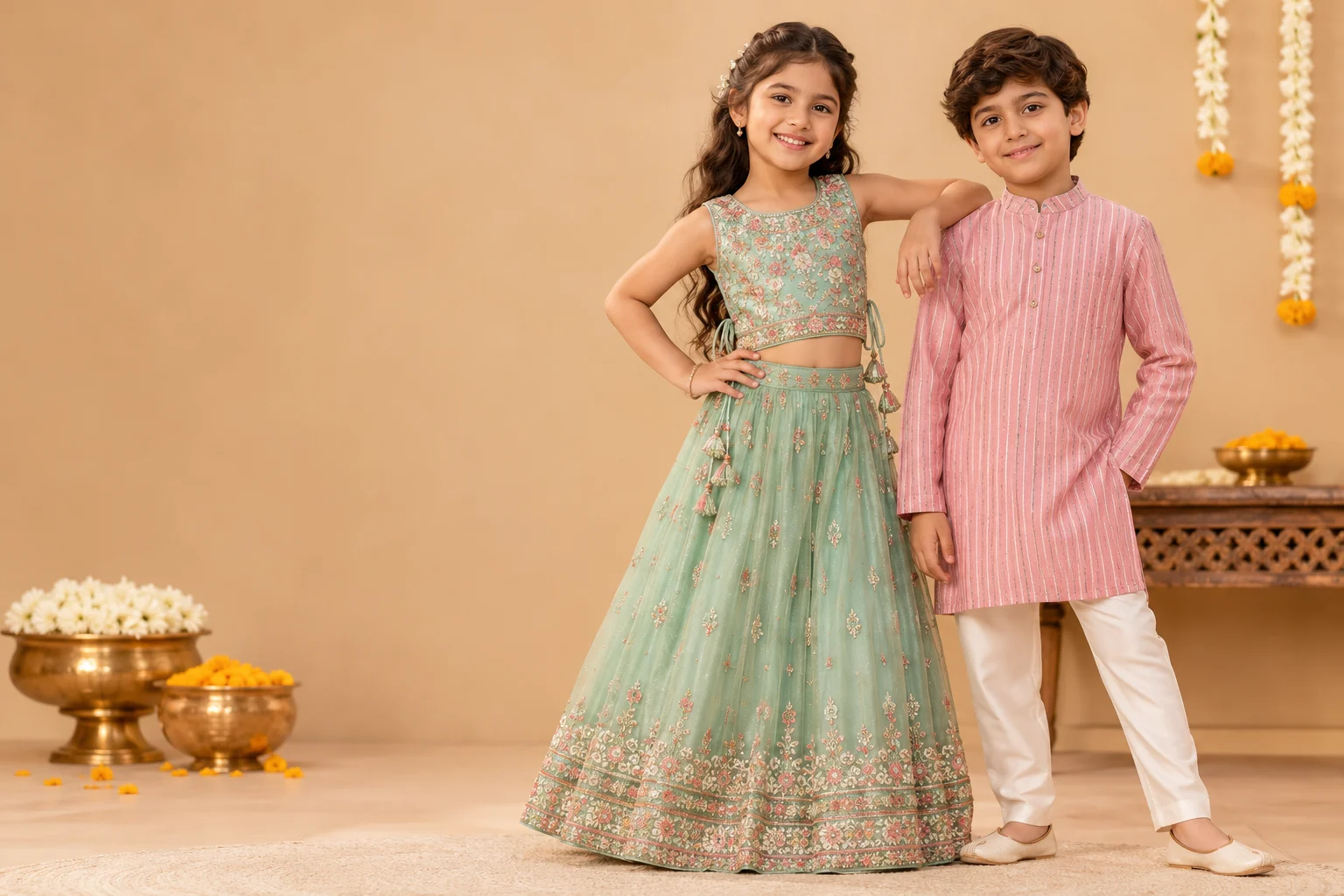
In order to help Little Muffet overcome this obstacle, digiVirus developed an AI-powered visual creation method that allows the company to produce fashion product images without relying solely on traditional photo shoot setups.
High Costs of Traditional Fashion Photoshoots
Creating fashion visuals for children’s clothing involves several production requirements. Unlike simple product photography, fashion campaigns often need models, appropriate backgrounds, styling, lighting, and professional editing to present outfits effectively.
For a fashion brand with multiple products and collections, repeating this process can increase both production time and expenses.
Some of the key challenges included:
- Model Expenses: Models must wear a variety of costumes for traditional fashion photography, which raises production costs.
- Studio and Photography Expenses: Professional photography may require reservations for a studio, photographers, lighting gear, and other arrangements.
- Styling Requirements: To create the intended visual look, every outfit requires appropriate presentation, styling, and preparation.
- Post-Production Work: More time and resources are needed for editing, retouching, color correction, and backdrop modifications.
- Content Production Costs: The total creative expenditure may go up if several images are produced for various products and digital platforms.
The requirement was to explore a more efficient way of producing fashion visuals while maintaining an attractive presentation of the brand’s clothing collections.
AI-Powered Fashion Visual Production by digiVirus
Instead of entirely depending on conventional photo shoot techniques, digiVirus approached the job using an AI-powered creative production workflow.
The goal was to lower the resources typically needed for traditional photography while using artificial intelligence to complement Little Muffet’s fashion products’ visual presentation.
DigiVirus employed AI-based visual production techniques to create fashion-focused product images instead of setting up a full photo shoot for every visual requirement.
The approach involved several creative considerations:
1. AI-Based Visual Creation
Product graphics were created using AI-powered tools, which lessened reliance on traditional photography setups. This offered a different way to showcase kids’ fashion items.
2. Fashion-Focused Presentation
The visual production approach focused on showing the clothing in an attractive way. At the time the fashion products stayed at the heart of the creative work.
3. Reduced Production Dependencies
The project used AI‑powered techniques to cut down on traditional photoshoot resources; AI‑powered techniques helped reduce the need, for model arrangements, studio setups and conventional photography production.
4. Creative Production Efficiency
The AI-based workflow offered a different way to approach fashion content creation, helping manage visual production requirements without repeating the complete traditional photoshoot process.
Key Results and Business Impact
The project demonstrated how AI-powered creative production can provide an alternative to traditional fashion photography.
For Little Muffet, the primary outcome was reduced dependence on conventional photoshoot arrangements and the associated production costs.
Key project outcomes included:
- Reduced dependence on traditional photoshoot production.
- Avoided associated conventional shooting costs through an AI-based workflow.
- Created fashion product visuals using AI-powered creative techniques.
- Reduced the requirement for multiple traditional production resources.
- Introduced an alternative approach to fashion content creation.
The project focused on production efficiency and cost management rather than claiming unverified increases in sales, engagement, or conversions.
Why AI-Powered Visual Production Matters for Fashion Brands
- Fashion brands often need visual content to show new collections, seasonal launches, holiday ranges and single products. Traditional photoshoots are still useful for creative needs but they are not always needed for every visual production job.
- AI-powered visual production offers another option, for fashion brands that want to manage budgets and try new content formats.
- AI-powered visual production can help fashion brands cut some production dependencies, try visual styles and create product-focused creative assets.
- For children’s fashion brands AI-powered visual production can be especially useful when handling clothing designs and collection needs.
Conclusion
The Little Muffet project highlights how AI can support the changing needs of fashion content production.
By using an AI-powered way to make pictures digiVirus helped cut down on the need for photo sessions and saved money on the costs of taking pictures. They made images for the brand’s clothing items.
With an Instagram following of, than 804,000 people Little Muffet shows how famous fashion brands can try using AI to help with creating pictures. This is an option of using regular photography for some of their image needs.
The project reflects digiVirus’s approach to combining creative production and AI technology to help brands manage their content requirements more efficiently.