

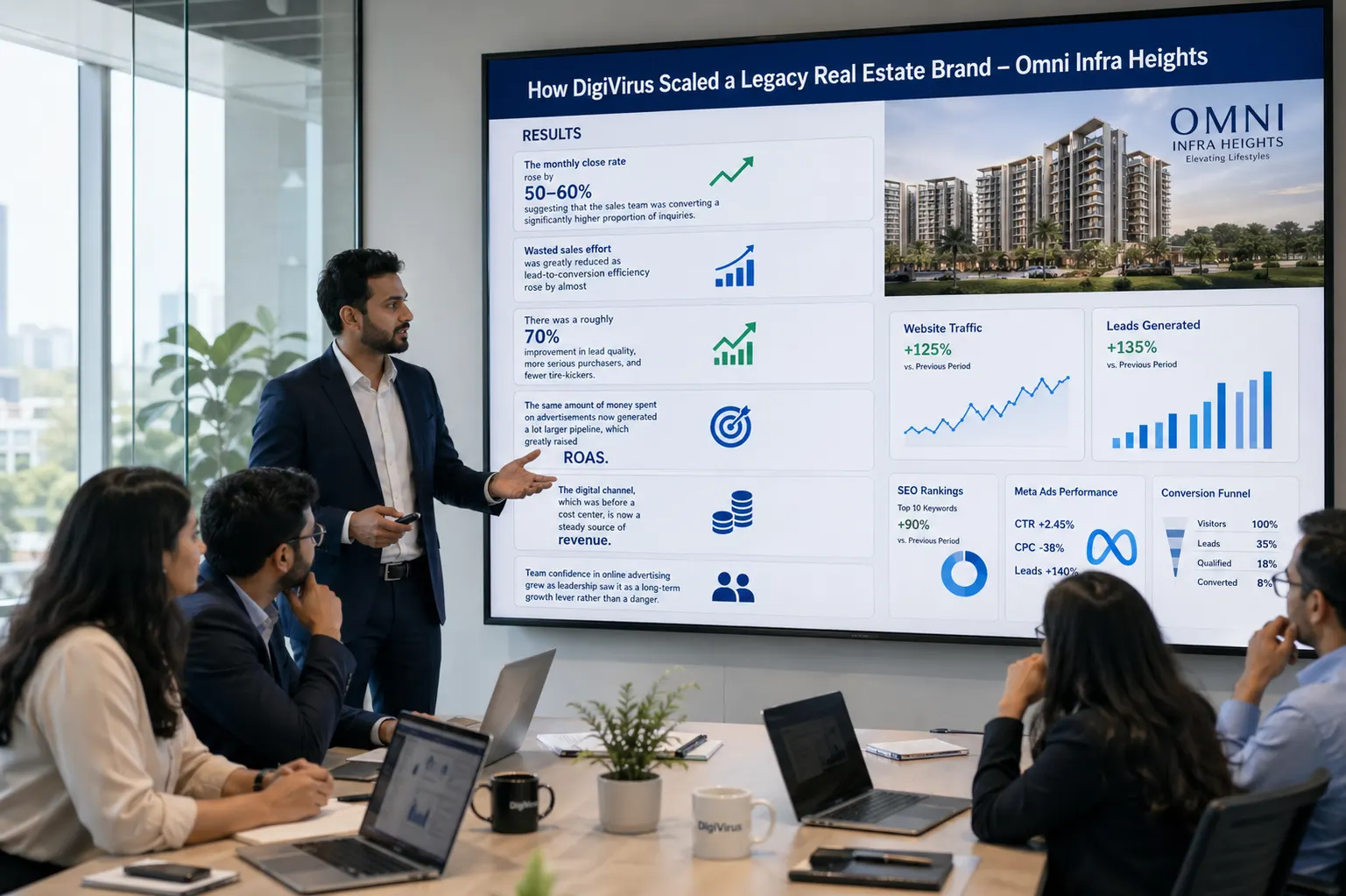
How digiVirus a Legacy Real Estate Brand – Omni Infra Heights
Omni Infra Heights is a family-run real estate business that has been in operation for three generations. The business had always expanded naturally since it was founded on trust, solid community ties, and word-of-mouth recommendations. However, when the third generation took over, they soon saw a gap: Omni Infra Heights had virtually no web presence, while its rivals were flourishing.
- Three generations of credibility and local trust in the Vrindavan real estate market
- Primary growth model was referrals and repeat clients, zero structured digital strategy
- Never competitors were capturing online audiences and converting them into buyers
- Leadership recognized the need to modernize without compromising the brand’s identity
The Problem: Ads Running, Nothing Working
Before approaching digiVirus, Omni Infra Heights had already tried running Meta Ads through another agency. Not because advertisements are ineffective, but rather because they were executed without a thorough grasp of the product or the consumer, the outcomes were depressing.
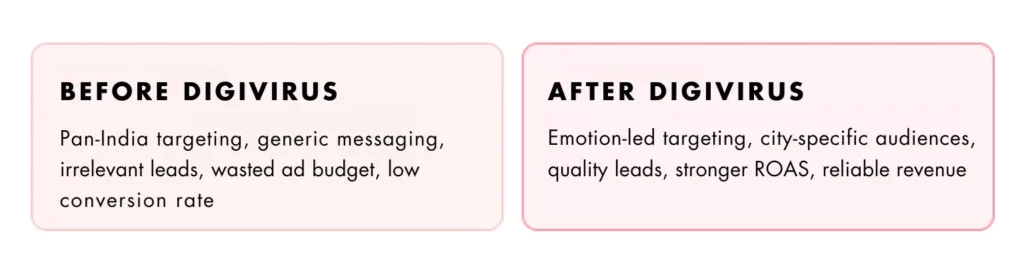
- Campaigns were targeting pan-India audiences for a Vrindavan-specific project, a fundamental mismatch
- No emotional or geographic relevance in the targeting; leads came from cities with zero relocation intent
- Ad messaging was generic, failing to speak to the unique spiritual and lifestyle appeal of Vrindavan
- Sales team was overwhelmed with low-quality inquiries, wasting time and resources on dead-end leads
- Ad budget was burning with poor ROAS and no clear path to improvement
Our Approach: Understand Before You Advertise
At digiVirus, we never launch campaigns on day one. Before writing a single ad copy or setting a single targeting parameter, we spent time understanding the business, the product, and most critically, the buyer.
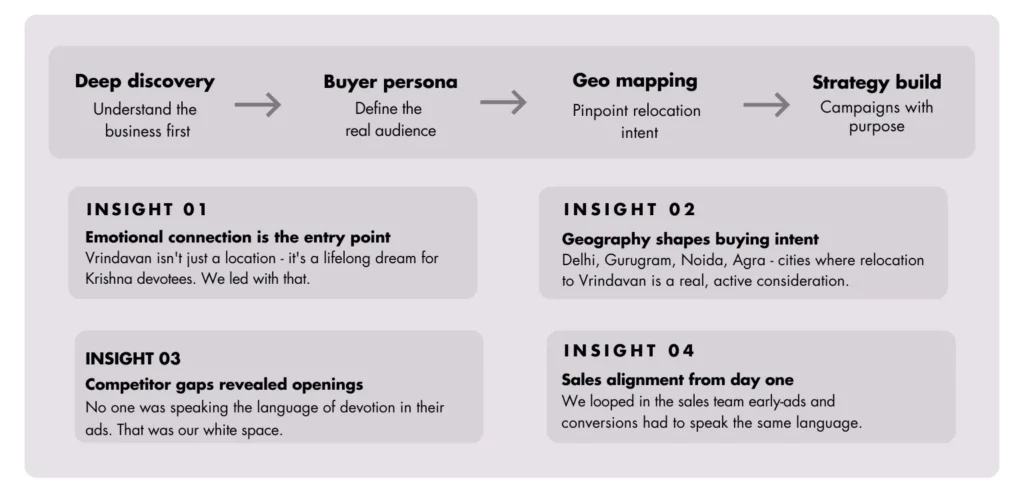
- Examined in-depth the project’s USP, the community, lifestyle appeal, and spiritual significance of Vrindavan
- Found that Krishna devotees’ desire to dwell near the sacred dham is their primary emotional motivator.
- Geographical groupings with actual relocation intent were mapped out: Agra, Delhi, Gurugram, Noida, and other NCR cities
- examined rival messaging to identify any weaknesses and establish Omni Infra Heights as a market leader.
- matched the campaign’s tone to the aspirational and devoted mindset of the real consumer persona
What We Actually Changed
We reorganized everything, targeting, messaging, creative approaches, and campaign architecture, after gaining the proper information. Each option was intimately related to the buyer’s identity and motivations, so the adjustments weren’t made at random.
- Shifted targeting to interest-based and intent-based audiences: Krishna devotees, ISKCON followers, spiritual communities, Mathura-Vrindavan travelers
- Narrowed geographic targeting to high-intent cities within driving distance of Vrindavan
- Rewrote ad creatives to lead with emotion the dream of waking up near the Yamuna, morning aarti, and a spiritually rooted life
- We built a campaign funnel that includes awareness, consideration, and conversion instead of going straight for the sale.
- Introduced lead quality filters in the form setup to reduce junk submissions right at the source
- Set up tracking and reporting to monitor lead quality, not just lead volume, on a weekly basis
The Results: Numbers That Spoke for Themselves
A few months after the reorganized campaigns went live, there was a noticeable change in both the statistics and the sales team’s perception of the leads they were getting.
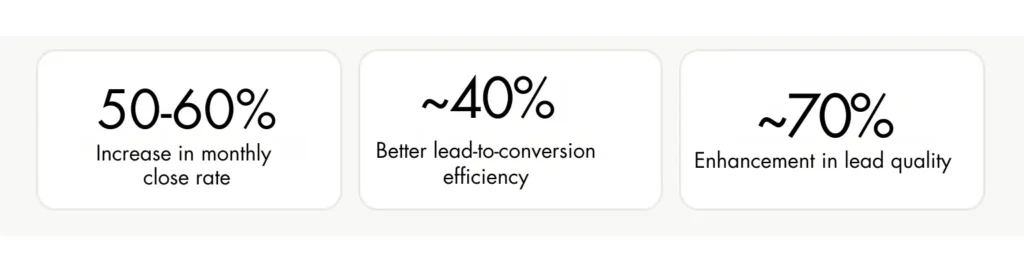
- The monthly close rate rose by 50–60%, suggesting that the sales team was converting a significantly higher proportion of inquiries.
- Wasted sales effort was greatly reduced as lead-to-conversion efficiency rose by almost 40%.
- There was a roughly 70% improvement in lead quality, more serious purchasers, and fewer tire-kickers.
- The same amount of money spent on advertisements now generated a lot larger pipeline, which greatly raised ROAS.
- The digital channel, which was before a cost center, is now a steady source of revenue.
- Team confidence in online advertising grew as leadership saw it as a long-term growth lever rather than a danger.
The Key Takeaway
This case study serves as a reminder that there are significant differences between running advertisements and running the appropriate ones. The target market for a commodity as specialized as Vrindavan real estate is a narrowly defined set of people who have a strong emotional bond with the location.
- A smaller, more focused audience always performs better than a larger, irrelevant one; geography and intent are considerably more important than reach.
- What distinguishes a scroll-stopper from a scroll-past is emotional significance in messaging.
- The only long-term strategy for real estate paid advertising is strategy first, spend later.
- Your most valuable resource is your sales team’s time; lead quality consistently outperforms lead volume.