

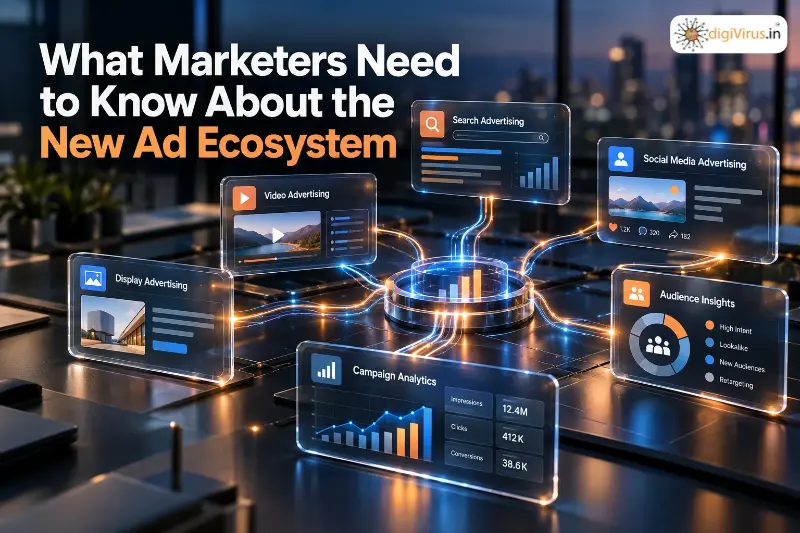
What Marketers Need to Know About the New Ad Ecosystem
Digital advertising is evolving faster than it ever has. A few years ago, marketers could drive leads and sales using keywords, audience targeting and basic campaign optimization. Today things are different. AI, changing privacy rules, new ad formats and evolving customer expectations are changing how brands connect with audiences.
The new ad ecosystem goes way beyond just advertising on Google or social media. It’s about understanding where people spend their time, how they make decisions and what gives them trust in a brand. Marketers need to stay up to date with these changes for campaigns that deliver real results.
1. The Evolution of Advertising with AI
Digital advertising has become an important part of AI. Platforms like Google Ads and Meta Ads use automation to help advertisers optimize bids, find potential customers and deliver relevant ads.
This saves time and improves campaign efficiency, but automation alone cannot guaranty success. Marketers still need good creatives, clear offers, proper conversion tracking, and a right understanding of their audience.
The best strategy is to let the AI take care of the repetitive optimization, and let humans focus on strategy, creativity, and understanding the customer.
2. Privacy Alters the Audience Targeting
More and more people are realizing how their personal information is gathered and used. Meanwhile, privacy regulations and shifts in tracking technology are altering how advertisers measure the performance of their campaigns.
marketers therefore should not depend solely on third-party tracking or general assumptions about customer behavior.
Instead, companies should develop first-party data by means of website interactions, customer inquiries, email subscriptions and consent-based forms. Brands can better understand their audiences by collecting useful information directly from customers, all within the bounds of privacy.
3. Creative Content Is More Important Than Ever
Even with sophisticated targeting options, if the message doesn’t resonate, an ad may fail to reach its audience.
Every day, people scroll by hundreds of posts, videos, and promotional messages. Craft a headline that stands out, pose a problem your audience can relate to, use a strong visual and make an offer that is relevant.
Marketers should consider different creative formats like short-form videos, customer testimonials, product demos and educational content. Rather than take a shot in the dark at which ad will perform best, they may use data from their campaigns to see what grabs attention and compels action.
4. Advertising is getting more connected.
Customers don’t usually take a straight path from seeing an advertisement to buying. A customer might see a brand on Instagram, then Google it, go to the website and ask questions on WhatsApp before they become a customer.
This means marketers need to look beyond individual platforms and think about the whole customer journey.
A connected strategy means that ads, landing pages, follow-up messages and sales conversations are all a consistent experience. It also helps businesses to know which channels are driving conversions and not to gage every platform only by clicks or views.
5. Better Measurement Leads to Better Decisions
Clicks and impressions are useful metrics, but they do not always tell the complete story. A campaign can generate thousands of clicks without producing meaningful business results.
Marketers should track metrics that match their goals, such as qualified leads, cost per acquisition, conversion rate, and return on ad spend.
Accurate conversion tracking and regular reporting help identify wasted spending and opportunities for improvement. The objective should not simply be to get more traffic, but to attract the right audience and generate measurable value.
Conclusion
The new ad ecosystem rewards marketers who combine technology with a clear understanding of people. AI, privacy-focused practices, creative testing, connected customer journeys, and reliable measurement are becoming increasingly important.
Businesses do not need to adopt every new advertising trend immediately. They need to understand which changes matter to their goals, test new approaches carefully, and keep improving based on real results.
In the long run, successful advertising will depend on more than reaching people. It will depend on giving them a relevant reason to pay attention, engage, and trust a brand.
Frequently Asked Questions (FAQs)
1. What is the new ad ecosystem?
The new ad ecosystem refers to the changing digital advertising environment shaped by AI, privacy developments, evolving consumer behaviour, and advertising across multiple platforms.
2. How is AI affecting digital advertising?
AI helps automate bidding, optimize campaign delivery, analyze performance, and support creative production. However, marketers still need to guide campaigns with clear goals and quality data.
3. Why is first-party data important for marketers?
First-party data helps businesses understand their customers through information collected directly and appropriately from website visits, enquiries, subscriptions, and customer interactions.
4. What metrics should marketers track in the new ad ecosystem?
Important metrics include conversion rate, cost per lead, customer acquisition cost, qualified leads, and return on ad spend. The right metrics depend on the campaign objective.
5. How can businesses prepare for changes in digital advertising?
Businesses should improve conversion tracking, create relevant advertising content, collect customer data responsibly, test different campaign strategies, and review performance regularly.