
How Google’s Latest Updates Are Changing Digital Marketing
Google continues to evolve how people discover information online. On October 15, 2026, Google announced new updates to AI Overviews and AI Mode, making links, sources, and related content more visible within AI-generated search responses. These changes could create new opportunities for businesses to improve online visibility and attract relevant website visitors.
For digital marketers, SEO is no longer just about ranking in traditional search results. Understanding how users discover websites through AI-powered search is becoming an important part of a modern marketing strategy.
What Is Google’s Latest Search Update?
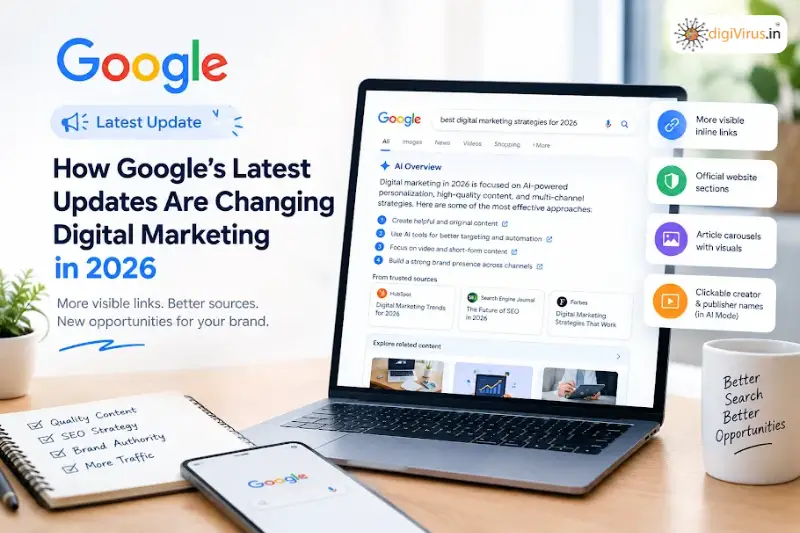
Google’s latest update focuses on helping users explore the web more easily through its AI-powered search features. According to Google’s official announcement, the changes include more visible inline links, dedicated sections for official websites, improved article carousels, and links to related content with visual thumbnails.
Google has also started testing clickable creator and publisher names on video results in AI Mode, allowing users to explore their profiles and other content.
These improvements aim to connect users with relevant websites, publishers, and original sources directly from AI-generated answers.
How Will This Update Affect Digital Marketing?
1. More Opportunities for Website Visibility
Google is making links within AI responses more noticeable and easier to access. This may give businesses additional opportunities to attract visitors when their content is referenced in relevant search responses.
Brands should focus on publishing useful information that directly answers customer questions and provides genuine value.
2. Quality Content Will Remain Important
Creating content only to target keywords may not be enough to build a strong online presence. Businesses should publish original insights, practical examples, detailed explanations, and accurate information that meets users’ needs.
Content should demonstrate relevant experience and expertise while providing clear answers to common customer questions.
3. SEO Strategies Must Adapt to AI Search
Traditional SEO remains important, but marketers should also consider how their content can help users researching complex topics through AI-powered search.
Use descriptive headings, logical content structure, relevant internal links, and clear explanations. Adding useful statistics, examples, and supporting sources can also help readers understand the information better.
However, no particular format guarantees that Google will feature a website in an AI response.
4. Website Traffic and Click-Through Rates May Change
More visible links could make it easier for users to visit websites mentioned in AI responses. However, the actual impact on traffic will depend on the search query, the content shown, user intent, and the visibility of competing results.
Digital marketers should monitor organic clicks, impressions, click-through rates, and landing-page performance instead of assuming that every search update will increase traffic.
5. Brand Authority Becomes More Valuable
Businesses should build a consistent online presence through informative website content, credible references, expert contributions, and useful resources. A recognisable brand with reliable information can give customers more reasons to trust it.
Publishing original research, answering frequently asked questions, and maintaining accurate business information can support this long-term strategy.
What Should Businesses Do Next?
Businesses should review their existing SEO strategy and identify pages that can provide more value to users. Update outdated information, improve website speed and mobile usability, and make important pages easy to navigate.
Use Google Search Console and website analytics to track changes in organic performance. Also, review which topics attract relevant visitors and develop content around genuine customer questions.
Google’s October 2026 update does not mean traditional SEO is disappearing. Instead, it highlights the importance of combining strong SEO fundamentals with helpful, original content that supports users throughout their search journey.
Frequently Asked Questions (FAQs)
1. What is Google’s latest search update in October 2026?
On October 15, 2026, Google announced improvements to AI Overviews and AI Mode, including more visible inline links, official website sections, article carousels, and related content links.
2. How does Google’s latest update affect SEO?
The update creates additional opportunities for websites to be discovered through AI-powered search responses. However, it does not guarantee better rankings or increased organic traffic.
3. Will AI Overviews reduce website traffic?
The impact varies by search query and user behaviour. AI-generated answers may satisfy some users directly, while visible source links can encourage others to visit relevant websites.
4. How can businesses improve visibility in AI search?
Businesses should create original, accurate, and helpful content, maintain sound technical SEO, use clear headings, and provide a good user experience. No specific tactic guarantees inclusion in AI responses.
5. Is traditional SEO still important in 2026?
Yes. Keyword research, technical SEO, relevant content, internal linking, and website usability remain important foundations of digital marketing, including for AI-powered search experiences.