
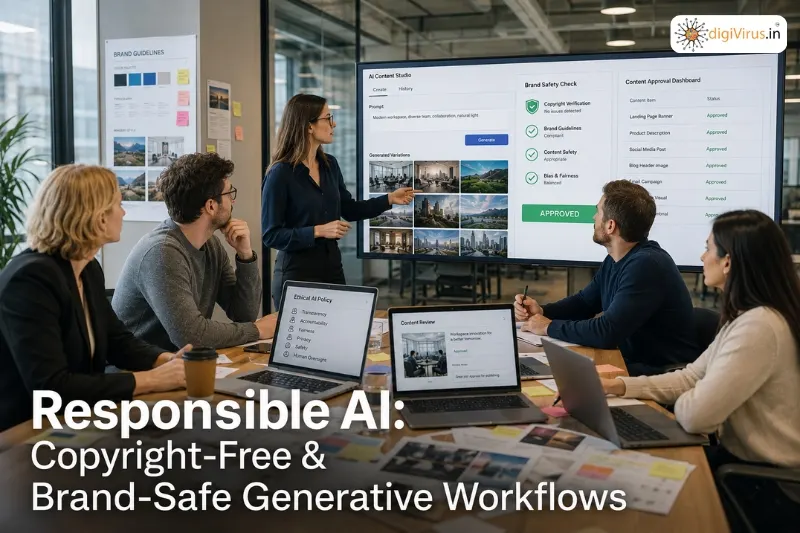
Responsible AI: Copyright-Free & Brand-Safe Generative Workflows
The way companies create content is evolving due to artificial intelligence. AI solutions enable businesses to create content more quickly than ever before, from blog entries and social media posts to films and advertising campaigns. However, there are also significant issues with copyright, false information, and brand reputation in addition to speed and inventiveness.
Nowadays, a lot of companies are wondering how to deploy AI properly without harming their brand or running ahead of regulations. Responsible AI workflows are the solution.
A responsible AI workflow entails the cautious, moral, and regulated use of AI tools. It assists companies in producing unique content while upholding copyrights, maintaining brand identification, and building customer confidence.
Why Responsible AI Matters
Large volumes of web data are used by generative AI algorithms to learn. This can occasionally lead to risks. AI-generated material may inadvertently employ false information, replicate someone else’s work, or produce images that don’t align with a company’s brand values.
Even a single error may be costly for organizations. Customer trust and a company’s reputation can be harmed by copyright claims, deceptive advertising, or unsuitable AI results.
These risks are decreased by responsible AI methods. They support teams in producing content that is genuine, safe, and compliant with corporate guidelines.
What Is a Copyright-Free Workflow?
A copyright-free workflow focuses on creating content that does not violate ownership rights. Businesses should never assume AI-generated content is automatically safe to use.
To build a safer workflow, companies should:
Use Trusted AI Tools
Choose platforms that clearly explain how their AI models are trained. Reliable tools usually provide transparency about licensing and data usage policies.
Check AI-Generated Content
Always review text, images, and videos before publishing. AI can sometimes generate content that looks too similar to existing material.
Add Human Editing
Human creativity is still important. Editing AI content helps make it unique, accurate, and more natural for readers.
Use Licensed Assets
When creating visuals, music, or videos, businesses should use properly licensed assets or copyright-safe libraries.
Maintain Content Records
Keeping records of prompts, edits, and approvals can help businesses track how content was created if questions arise later.
Keeping AI Content Brand-Safe
Brand safety means protecting a company’s reputation, values, and messaging. AI tools can generate content quickly, but they do not always understand tone, culture, or business ethics.
A brand-safe AI workflow includes clear guidelines for how AI should be used.
Create Brand Rules
Companies should define tone of voice, approved messaging, design styles, and restricted topics. This helps AI-generated content stay consistent with the brand identity.
Use Human Approval
AI should support creative teams, not replace decision-making completely. Final approval should always come from human reviewers.
Avoid Harmful or Misleading Content
AI-generated content should never spread false claims, offensive language, or manipulated information. Fact-checking is essential before publishing.
Protect Customer Trust
Customers value honesty. Businesses should be transparent when AI is involved in content creation, especially in sensitive industries like healthcare, finance, or education.
The Role of Human Creativity
AI functions best when paired with human cognition. AI can come up with ideas fast, but people are more creative, strategic, and emotionally intelligent.
This procedure is often followed by a successful workflow:
- The plan and objectives are made by humans.
- AI assists in producing ideas or drafts
- Teams of people evaluate and enhance the content.
- Sensitive documents are approved by legal or compliance teams.
- After quality checks, the final article is published.
This well-rounded strategy lowers risks and boosts productivity.
Benefits of Responsible AI Workflows
Businesses that follow responsible AI practices gain several advantages:
- Improved defense against copyright problems
- Improved reputation of the brand
- Greater consistency in the quality of content
- Enhanced client confidence
- Reduced risk and faster manufacturing
- Enhanced long-term credibility of the company
Responsible AI is not about limiting creativity. It is about using technology wisely and professionally.
Final Thoughts
Generative AI is becoming an increasingly important part of modern marketing and content creation. However, accountability should always come before speed. Businesses that focus only on automation without doing sufficient due diligence risk moral, legal, and reputational problems.
By creating copyright-free and brand-safe AI workflows, businesses can confidently use AI while protecting their corporate identity. Future AI content creation will go beyond simply creating more content faster. It entails creating information that is trustworthy, distinctive, and in line with genuine human values.