
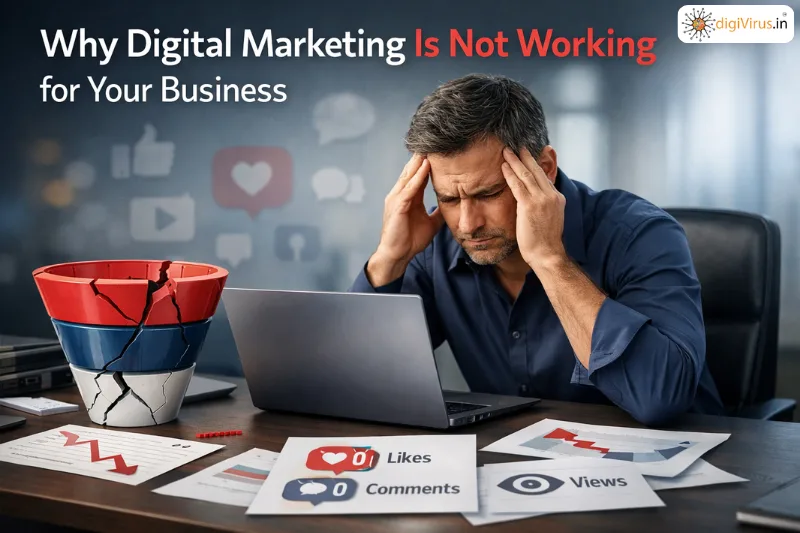
Many businesses invest time and money in digital marketing but still fail to see results. If your campaigns are not bringing leads, traffic, or sales, the problem may not be the tools but the strategy behind them. Understanding the common reasons can help you fix mistakes and get better returns.
1. Lack of Clear Goals
Without clear goals, digital marketing becomes a random activity. You must know whether you want brand awareness, website traffic, or direct sales. When goals are not defined, you cannot measure success or improve your campaigns effectively.
2. Not Understanding Your Target Audience
If you do not know who your ideal customer is, your message will not connect. Research their age, interests, problems, and online behavior. The more you understand your audience, the easier it becomes to create relevant campaigns.
3. Poor Content Strategy
Content is the backbone of digital marketing. If your blogs, videos, or social posts do not provide value, users will ignore them. Focus on solving problems, sharing tips, and educating your audience instead of only promoting products.
4. Inconsistent Efforts
Digital marketing needs regular effort. Posting once in a while or running ads for a short time will not build trust. Consistency in content, email marketing, and social media keeps your brand visible and memorable.
5. Ignoring SEO Basics
Search engine optimization facilitates online discovery for your company. If your website is not optimized with proper keywords, meta tags, and fast loading speed, you will miss organic traffic that could convert into customers.
6. Choosing the Wrong Platforms
Every platform is not suitable for every business. For example, a B2B brand may perform better on LinkedIn than on Instagram. Selecting the right channels based on your audience saves time and improves results.
7. Not Tracking and Analyzing Data
If you are not checking analytics, you are working blindly. Data shows which campaigns are working and which are wasting budget. Regular analysis helps you make smart decisions and optimize performance.
8. Unrealistic Expectations
Digital marketing does not give instant success. It takes time to build trust, rank on search engines, and grow followers. Expecting quick results often leads to disappointment and early withdrawal from effective strategies.
9. Weak Website Experience
Even the best campaigns fail if your website is slow, confusing, or not mobile friendly. A clear layout, fast speed, and simple navigation improve user experience and increase conversions.
10. Not Adapting to Changes
Digital trends change quickly. Algorithms, customer behavior, and new tools keep evolving. Businesses that do not update their strategies fall behind competitors who experiment, learn, and adapt continuously.
Conclusion
Digital marketing fails not because it is ineffective, but because it is often executed without planning, research, and consistency. By setting clear goals, understanding your audience, creating valuable content, and tracking performance, you can turn your marketing efforts into a powerful growth engine for your business.
Action Steps to Improve Your Digital Marketing
Start by auditing your current campaigns and identifying gaps in goals, audience targeting, and content quality. Create a simple monthly plan that includes SEO, social media, and email activities. Test different formats, monitor analytics weekly, and adjust strategies based on real data. Invest in learning or hiring experts if needed. Most importantly, stay patient and consistent because sustainable growth takes time. When you focus on value, clarity, and continuous improvement, digital marketing will gradually begin to deliver measurable and long lasting results for your business. Regular review and flexibility ensure your strategy stays aligned with changing market needs and customer expectations. This approach builds stronger brand trust over time.