
Why B2B Companies Are Advertising on ChatGPT
The way businesses reach potential customers is changing quickly. For years, B2B companies depended heavily on Google Search, LinkedIn, email marketing, and industry websites to generate leads. Now, another channel is becoming part of the conversation: AI-powered platforms.
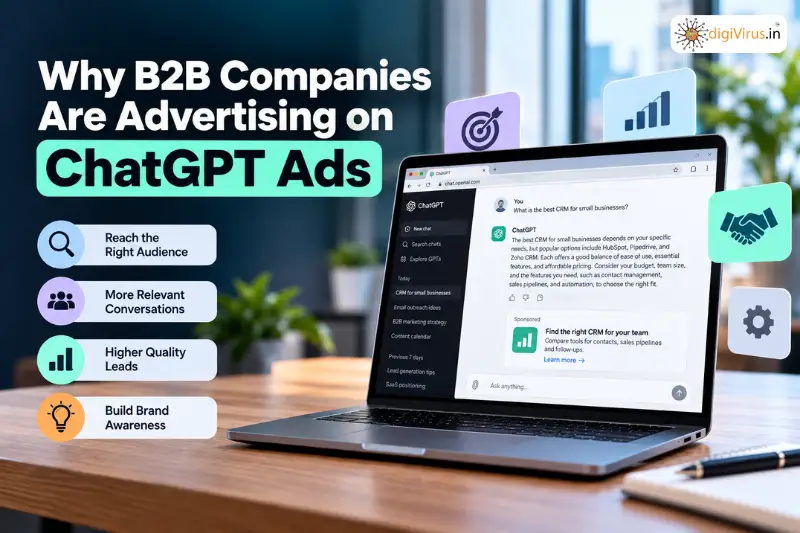
As more professionals use ChatGPT to research software, compare services, understand business problems, and find solutions, companies are beginning to see an opportunity to reach customers at a much earlier stage of the buying journey. This is one reason interest in ChatGPT Ads is growing among B2B marketers.
But why are B2B companies interested in advertising on an AI platform? The answer is closely connected to how people now search for information.
Changing B2B Search Behavior
Traditional search usually starts with a short keyword such as “best CRM software” or “SEO agency for business.” AI search is different. A user can describe an entire business problem in one question.
For example, a business owner might ask ChatGPT:
“Which CRM should a small sales team use if it needs automation but has a limited budget?”
That question contains valuable information about the person’s needs, preferences, and buying stage.
This makes AI conversations potentially useful for B2B marketing. Instead of simply reaching someone who searched for a keyword, businesses can potentially reach users while they are actively researching a problem or evaluating solutions.
B2B Buyers Are Already Using AI for Research
B2B purchasing decisions often involve considerable research. Buyers may compare vendors, understand technical concepts, create shortlists, and look for recommendations before contacting a sales team.
AI tools can make this research faster.
For marketers, this creates a new opportunity. If advertising becomes available within AI conversations, companies could potentially appear in environments where users are already discussing the exact problems their products solve.
This is a major reason ChatGPT Ads are attracting attention from B2B marketers.
Better Context Than Traditional Advertising
One potential advantage of advertising inside an AI environment is context.
A traditional display advertisement might be shown based on a broad audience category, website visit, or search query. An AI platform can understand a much longer conversation and the user’s stated requirements.
For example, someone discussing inventory management, team size, software integrations, and budget provides significantly more context than someone searching for “inventory software.”
That context could eventually help advertisers make their campaigns more relevant.
However, relevance will depend heavily on how advertising is implemented. More context does not automatically mean better advertising.
B2B Products Often Need Education
Many B2B products are difficult to understand through a simple advertisement.
Cloud software, cybersecurity solutions, marketing platforms, analytics tools, and business automation products often require explanation before a buyer can understand their value.
AI platforms are naturally suited to educational conversations. Users can ask follow-up questions and explore different options.
For B2B brands, this creates an interesting possibility: advertising could become part of a broader educational journey rather than simply trying to generate an immediate click.
Why This Matters for Marketers
The rise of ChatGPT Ads could push B2B marketers to rethink how they create content and campaigns.
Instead of focusing only on keywords, marketers may need to understand the questions buyers ask, the problems they describe, and the information they need before making a purchase.
This does not mean traditional SEO, Google Ads, or LinkedIn advertising will disappear. These channels still serve different purposes.
Instead, AI advertising may become another layer in the B2B customer journey.
What Should B2B Companies Do Now?
Companies should avoid treating AI advertising as another platform where they simply copy existing campaigns.
A better approach is to build strong informational content, clearly explain products and services, answer customer questions, and understand how their target audience uses AI for research.
Businesses should also monitor how AI search and advertising develop before making large investments.
The opportunity is significant, but the advertising model is still evolving. Companies that understand their customers and create genuinely useful information will be better prepared as this channel develops.
Frequently Asked Questions
1. What are ChatGPT Ads?
ChatGPT Ads refers to advertising opportunities associated with the ChatGPT platform. The exact format, availability, targeting options, and placement can change as the advertising ecosystem develops.
2. Why are B2B companies interested in AI advertising?
B2B companies are interested because their customers increasingly use AI tools to research problems, compare solutions, and learn about products. Advertising in such environments could help brands reach potential buyers during research.
3. Will ChatGPT Ads replace Google Ads?
Not necessarily. Google Ads and AI-based advertising serve different user behaviors. Search advertising can capture specific searches, while AI platforms are built around conversational research.
4. Is AI advertising useful for small B2B companies?
It could be, depending on pricing, targeting, audience size, and campaign performance. Small businesses should evaluate actual conversion data rather than assuming a new advertising channel will automatically produce leads.
5. Should B2B marketers prepare for AI advertising?
Yes, marketers can prepare by understanding conversational search, creating useful content, studying customer questions, and monitoring developments in AI advertising. The goal should be to understand the channel before investing heavily in it.