
Boosting Posts vs Running Ads
In today’s competitive digital landscape, businesses constantly seek effective ways to reach their target audience on social media. Two commonly used methods are boosting posts and running structured ad campaigns. While both involve paid promotion, they are not identical. Each option serves different marketing objectives, offers varying levels of control, and impacts return on investment differently. Understanding their distinctions helps businesses choose the right approach for growth.
What Does Boosting a Post Mean?
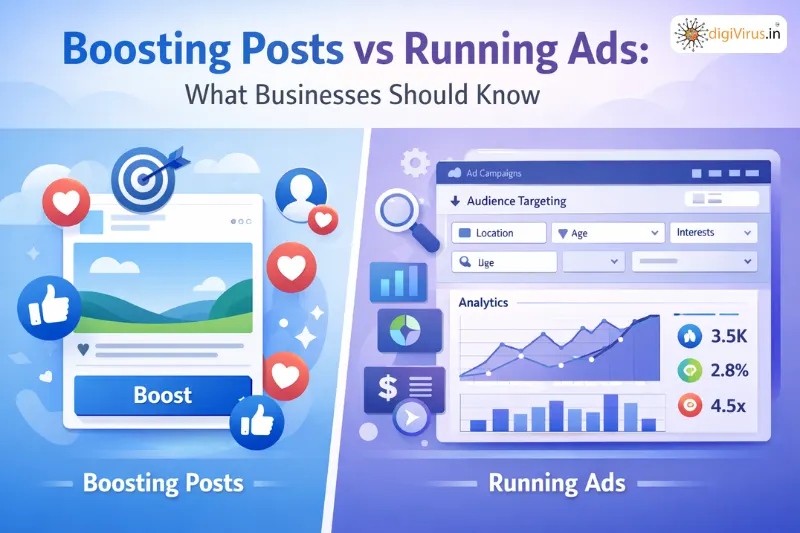
Boosting a post is the simplest way to promote existing content on a social media page. When a business boosts a post, it pays to increase the reach of content that has already been published organically. This option is quick, easy to set up, and requires minimal technical knowledge. It is often used to promote announcements, product launches, or posts that are already receiving good engagement from followers.
Advantages of Boosting Posts for Businesses
One major advantage of boosting posts is convenience. Small businesses or beginners in digital marketing can promote content within minutes without navigating complex ad dashboards. Boosting is also useful for improving brand awareness and ensuring that more people see important updates. Additionally, it allows companies to test which types of content resonate with their audience before investing in larger campaigns.
Limitations of Boosting Posts
Despite its simplicity, boosting posts comes with limitations. Targeting options are basic, often limited to demographics like age, location, and general interests. There is less control over placements, bidding strategies, and campaign objectives. Because of this, boosted restrictive.
Understanding Full Advertising Campaigns
Running ads through an advertising manager offers a more structured and strategic approach. Unlike boosting, full ad campaigns allow businesses to define specific goals such as website traffic, lead generation, app installs, or purchases. Marketers can create multiple ad sets, test different creatives, and monitor detailed performance metrics. This method is designed for scalability and long-term marketing success.
Benefits of Running Structured Ads
Full advertising campaigns provide advanced targeting capabilities. Businesses can create custom audiences based on website visitors, customer lists, or user behavior. They can also build lookalike audiences to reach people similar to existing customers. This precision improves engagement quality and reduces wasted ad spend. Over time, optimization tools help refine campaigns, lower costs, and deliver stronger results.
Budget and Cost Considerations
Budget planning plays a key role when deciding between boosting posts and running ads. Boosted posts typically require smaller budgets and are ideal for short-term promotions or testing engagement levels. In contrast, structured ad campaigns may require a larger budget but often generate better long-term returns due to improved targeting and conversion-focused strategies. Businesses must align spending with their marketing objectives and growth plans.
Creative Flexibility and Experimentation
Another important difference lies in creative control. Boosting relies on content that has already been published, limiting flexibility unless a new post is created. Full ad campaigns, however, allow continuous experimentation with headlines, visuals, calls to action, and formats. This flexibility enables marketers to analyze performance and improve campaigns over time, leading to more effective messaging and stronger audience response.
Analytics and Performance Measurement
Boosted posts provide basic metrics such as reach, likes, comments, and shares. While these insights are helpful for measuring engagement, they do not offer deep conversion tracking. Structured ads, on the other hand, provide comprehensive analytics, including click-through rates, cost per conversion, and customer journey insights. These detailed reports help businesses make data-driven decisions and improve overall marketing performance.
Conclusion: Choosing the Right Strategy
Boosting posts and running ads are not competing strategies but complementary tools. Boosting works best for quick visibility and awareness, while structured ad campaigns are ideal for achieving targeted, measurable results. Businesses should evaluate their goals, budget, and marketing experience before choosing an approach. By combining both methods strategically, brands can enhance reach, improve engagement, and achieve sustainable digital growth over time.
posts are better suited for increasing visibility rather than driving conversions such as sales, sign-ups, or downloads. Businesses seeking measurable outcomes may find this option